Gentle Training for Strength, Stability, and Comfort
Low-impact exercise provides a practical way to maintain muscle tone and physical balance without placing excessive stress on the body. Unlike high-intensity workouts, these activities focus on controlled movements, stability, and gradual progress.
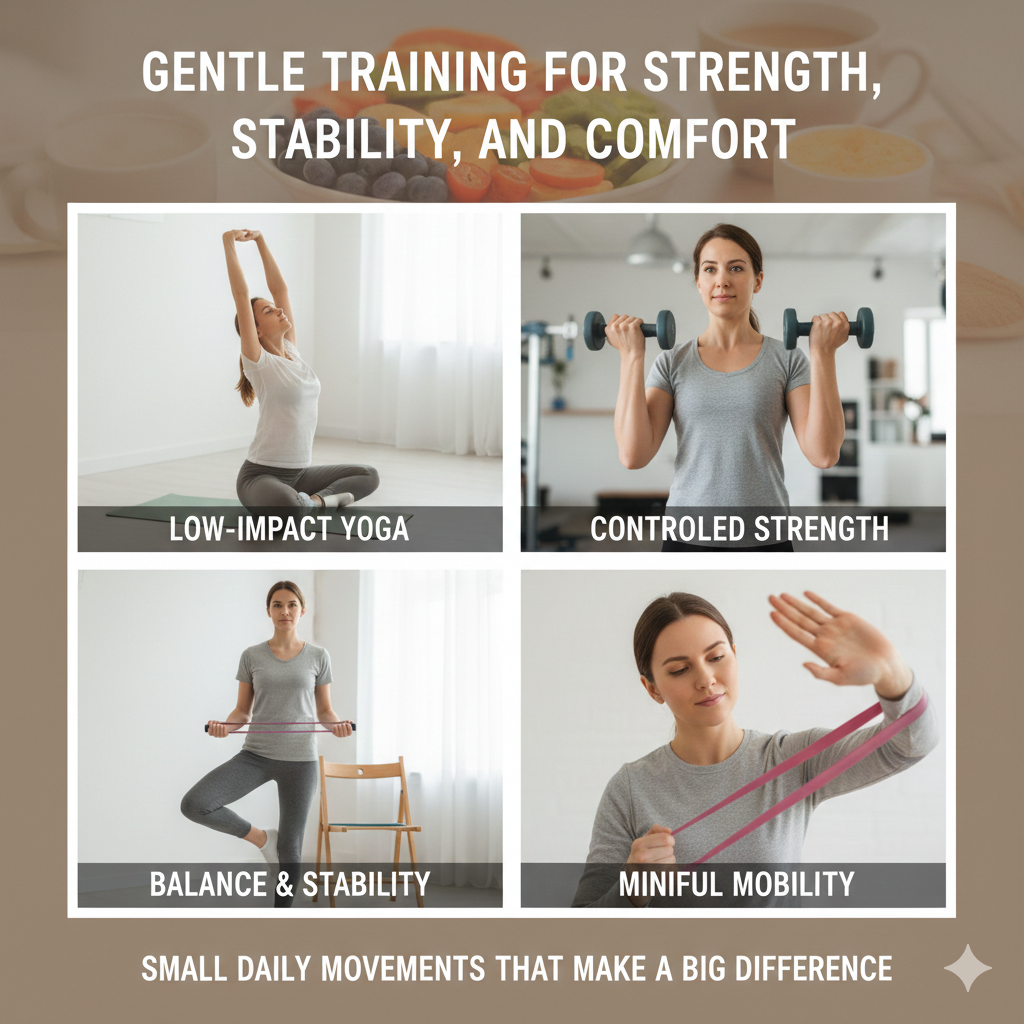
Examples of low-impact exercises include bodyweight routines, mobility drills, resistance band exercises, swimming, cycling at a comfortable pace, and flexibility-focused practices. These forms of movement support joint comfort while helping maintain strength and coordination.
Muscle tone is not only about appearance; it is closely connected to posture, stability, and everyday function. When muscles are regularly engaged through moderate activity, they help support alignment and reduce strain on joints. Balanced muscle activation can also improve coordination and body awareness.
Another benefit of gentle training is its accessibility. Most people can begin with minimal equipment and adjust intensity according to their comfort level. This makes it easier to maintain consistency, which is essential for long-term results.
Flexibility and mobility exercises are equally important. Controlled stretching and range-of-motion work may support joint function and help reduce stiffness associated with sedentary routines. Combining strength and mobility creates a balanced approach that supports overall physical tone.
To create a simple low-impact routine:
- Begin with 5–10 minutes of light warm-up movements
- Include basic strength exercises such as squats, wall push-ups, or step-ups
- Add mobility drills for hips, shoulders, and spine
- Finish with gentle stretching
The goal is not rapid transformation but steady improvement. Moderate, controlled training encourages long-term adherence and supports daily comfort.
By choosing sustainable methods over extreme approaches, individuals can maintain strength, stability, and confidence in their movement without unnecessary strain.